Imagine touching a cave wall and leaving an imprint that outlasts empires. For most of us, art is something we create today. But what if I told you that long before written history, our ancestors were leaving behind clues to their complex minds? I recently came across a discovery in Indonesia that completely floored me, pushing back the timeline of human creativity by tens of thousands of years. This isn't just about old paintings; it's about understanding how far back our "human" traits go.
A handprint that rewrites history
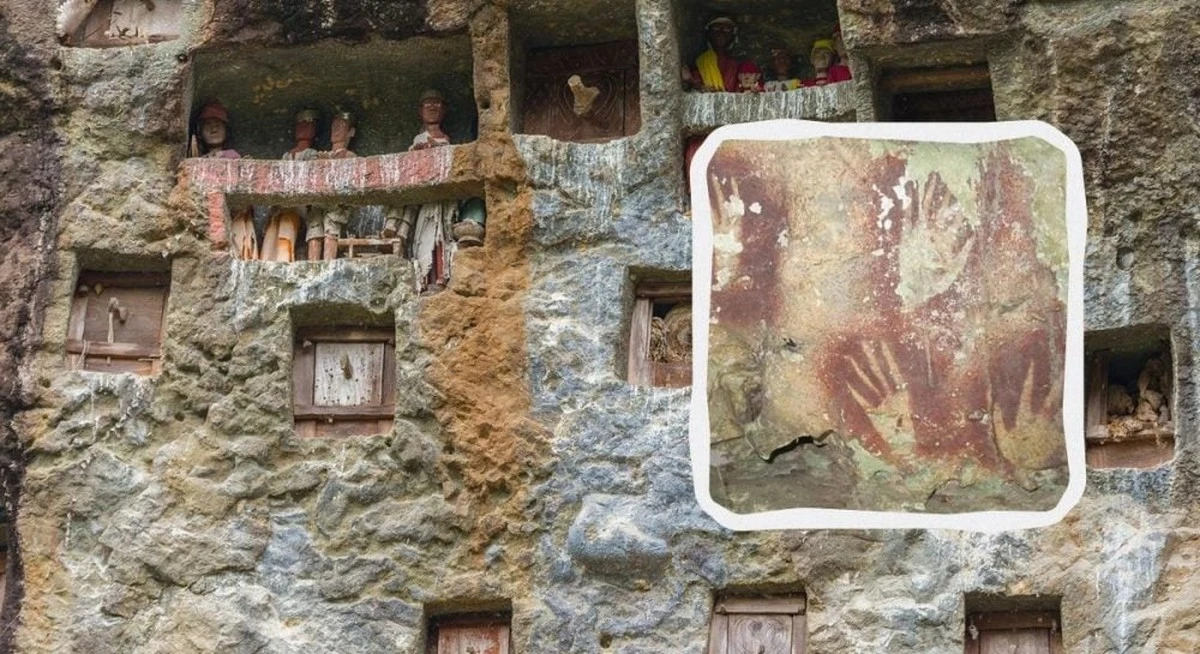
Deep within a cave on the Indonesian island of Sulawesi, researchers have unearthed what could be the oldest known example of human symbolic behavior: rock art dating back a staggering 68,000 years. This finding, published in the journal Nature, shows us that our ancestors were not just surviving, but creating, communicating, and thinking abstractly at a time we previously thought them incapable of such sophistication.
What the cave wall reveals
The images found are striking: reddish-brown handprints, some with deliberately altered fingers, pressed onto the cave walls. These weren't accidental smudges. Scientists explain that the pigment was likely sprayed around the hand, creating stencil-like prints. The modification of fingers in some prints suggests a conscious effort, a deliberate artistic choice, hinting at a complex tradition of cave art that may have spanned across different cultures.
This discovery is particularly significant because it's the oldest archaeological evidence of our species' presence found in the Wallacea region of Indonesia. It challenges previous assumptions about the timeline and spread of early human cognitive abilities.
Who were the artists?
One of the most intriguing aspects of this finding is the mystery surrounding who exactly created these ancient masterpieces. Researchers are exploring a few compelling theories:
- The Denisovans: This extinct group of ancient humans lived in the region and might have had contact with Homo sapiens. Could they be the artists?
- Early Homo sapiens: Another strong possibility is that these prints were left by modern humans, ancestors who were migrating out of Africa through the Middle East into regions like Indonesia.
The truth is, we don't know for sure. What is clear is that these prints are a powerful testament to the presence and innovative activities of early humans, constantly pushing our understanding of prehistoric life further back in time.
More than just a pretty picture
This Indonesian cave art is not an isolated event. It adds to a growing body of evidence that suggests complex behavior in early humans occurred much earlier than previously thought. For instance, researchers recently identified some of the world's oldest venomous arrowheads, dating back about 60,000 years, and evidence of the earliest deliberate use of fire, around 400,000 years ago.
It's a constant reminder that our understanding of human history is always evolving. Every new discovery like this opens a window into the minds of our ancestors, revealing a much richer and more complex past than we often imagine.
A practical takeaway for today
While we can't replicate cave art with modern tools, the principle of deliberate creation and communication remains. Think about how you share information or express yourself. Are you leaving a clear, intentional mark? Sometimes, the most profound messages are conveyed through simple, deliberate actions – just like those ancient hands on a cave wall. We often overlook the power of leaving our own, unique imprint on the world, whether through art, knowledge, or connecting with others.
What do you think the altered fingers signify? Share your thoughts in the comments below!